India and the Global EV Landscape -A Promising Outlook
Do you know? By the time you finish reading this article Toyota, Ford and Volkswagen would have manufactured 179..,110.., and 178 units respectively! Well, that is the demand for ELECTRIC VEHICLES RIGHT NOW. In recent years, Electric Vehicles (EV) have been gaining momentum as the future of sustainable transportation. If we closely examine this trend from the government’s perspective, sustainability and increasing oil price drive the push towards EV adoption , while from the consumer’s perspective, EV adoption is driven by technological advancement and lifestyle upgrades. Though you know what an EV is and what it means for sustainability and user-friendly transportation, there are still some facts to be told about the global adoption of EVs. So buckle up and get ready to know why this shift in mobility is much more than just a fad!
GLOBAL SCENARIO
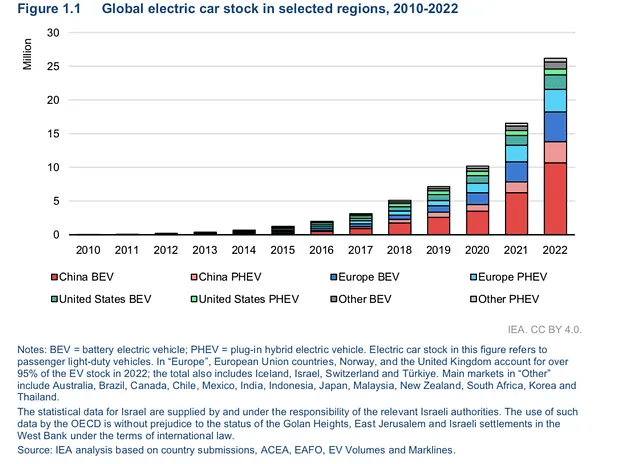
Surprisingly, despite rising energy prices, geopolitical uncertainty and contracting car markets, global electric vehicle sales reached a record high of 10 million units. It was seen as a growth driver for environmental activists and the world’s electric car makers.
In a remarkable feat, the electric vehicle industry witnessed a monumental shift. It took a mere five years (2012–2017) for sales to catapult from 100,000 to 1 million units. Astoundingly, within the same swift span (2017–2022), the industry achieved yet another milestone by reaching an astounding 10 million units sold, signifying an extraordinary acceleration in adoption.
NORWAY : Pioneering EV Revolution
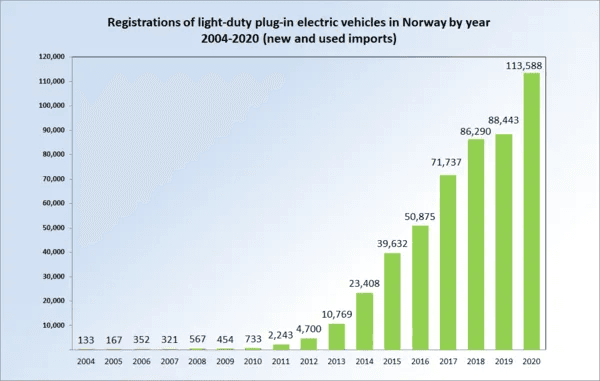
Norway, being an early adopter of EV’s, leads global adoption with a score of 115 in the Global Electric Mobility Readiness Index 2022. Initially, it took 4 years from 2008–2012 to sell 10,000 EVs in Norway, but now the scenario is completely different. In 2022, it took only 4 weeks to sell the same number of EVs, indicating an acceleration in EV adoption.
The government has played an instrumental role in solving the economic chicken-egg problem (i.e., determining which infrastructure should be put in place first, charging or manufacturing ) of EV through supportive initiatives like infrastructure projects, tax breaks, suspension of import tax, decrease in annual registration tax, and slashing EV tax to 0% in 2011. The result is that now EV’s account for more than 20% of passenger vehicles in the country, 80% of new vehicles sold, and 22,000+ public chargers have been installed to service nearly half a million EV’s on the road.
Already, almost 80% of new car registrations in Norway are electric and it has set 2025 as the end-date for Internal Combustion Engine (ICE) passenger and light commercial vehicle sales.
CHINA : World’s Largest EV Market
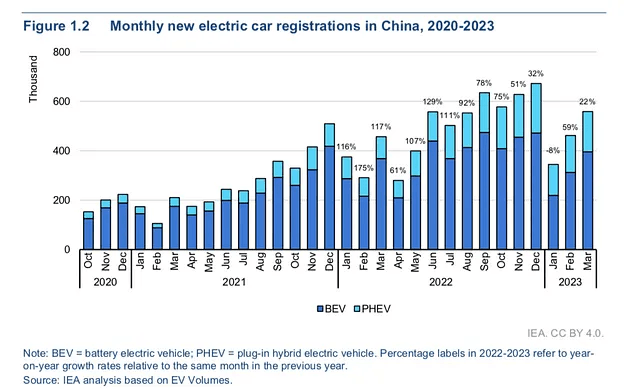
China has been making great progress with more than a decade of policy support from the government. The support ecosystem for consumers and manufacturers has been strong in the form of incentives, both financial and non-financial. This has made China the Leader in the EV industry, accounting for nearly 57% of global production. In 2021, China exported nearly 500,000 EV’s, and in 2022, China had humungous electric car registrations that made up to 60% of the registrations globally.
The growth of the EV adoption in China is mainly fuelled by local EV automotive companies that have designed their products to suit customers needs and preferences. The Local OEMs have made use of the robust battery charging infrastructure (1.15 million public charging stations), thus accelerating EV penetration in the market.
GERMANY : From Late starter to driving force in E-mobility
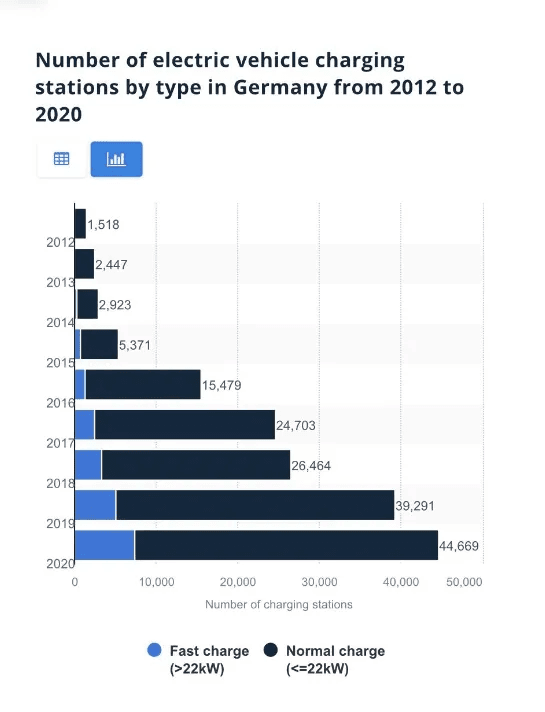
Germany started serious production of EV only in 2019–2020. But the late start was compensated by the effort of the federal government by encouraging international and local manufacturers to produce vehicles at varied price range, making EV’s an attractive choice. EV adoption was further accelerated by EU announcement of banning ICE vehicles by 2035.
According to a survey by Morning Consult, 30% of the potential car buyers for the next 6 months said EV is at the top of their list. The government is playing a integral role in persuading people to use EV by offering enticing benefits — discount on tolls and congestion zones, easy access to priority lanes, parking benefits.
USA: Resurgence of EV
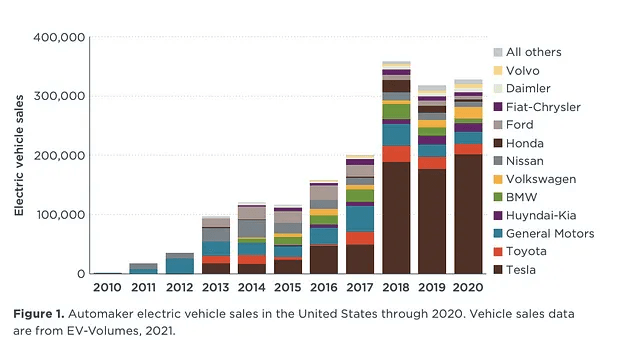
The EV market is clearly maturing and evolving, which is evident from the fact that after a sales dip in 2019–2020, 2022 witnessed an increase in electric car sales of 55% relative to 2021, led by Battery Electric Vehicles (BEV). Sales of Plug-in Hybrid Electric Vehicles (PHEV) also witnessed a growth of 15%.
The BEV registrations in the first quarter of 2023 amounted to 257,507, which is 63 percent more than a year ago and about 7 percent of the total market. Tesla recorded 155,360 new registrations in the first quarter of 2023 (up 37% year-over-year), which translated into about a 60% share of the total BEV segment.
UK: Higher demand with a promising future
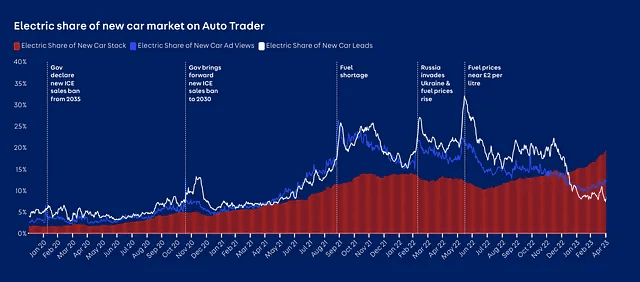
The UK market clearly demonstrates the desire and preference of the customers to switch to EVs. Now the challenge for the government is to rapidly expand the charging infrastructure as the EV sales share has skyrocketed over the years.
The EV Market is flooded with prime manufacturers like Tesla, Kia, Nissan, Hyundai, Ford, and Toyota. Of the best-selling models, the Tesla Y topped the list, registering a sale of 8,123 units in March 2023 alone.
According to new data from the Society of Motor Manufacturers and Traders (SMMT), registrations of full battery electric vehicles have jumped in the UK to take a 16.9 per cent share of the new car market in May 2023.
JAPAN: The Untapped Market
According to the data released by the Japan Automobile Dealers Association and the Japan Light Motor Vehicle and Motorcycle Association, Electric passenger car sales in Japan reached a record high of 77,238 units in the year ended March 2023, which is nearly 3.1 times the sales reached in the previous year.
Though Japan has only about 30,000+ charging stations now, it is expected to increase the number of charging stations to 1,50,000 by 2030. In parallel, Japan will continue offering subsidies for buyers of qualified vehicles.
OTHER MARKETS THAT ARE EXPECTED TO BOOM
SINGAPORE: Anticipating a Bigger EV market by 2040
As consumers are ready to pay a premium price to shift to EV’s, the market is expected to grow at an average annual rate of 40% year-on-year. Singapore has adopted a three-pronged approach: tax incentives, regulations and standards, and EV charger deployment.
The Singapore government has set aside $25 million over the next five years for EV-related initiatives entailing public-private partnerships. The government plans to deploy 60,000 charging points at public car parks and private premises by 2030.
The Vehicular Emissions Scheme, together with the EV Early Adoption Incentive Initiatives, provides tax rebates to reduce the prices of some electric cars by up to US $15,000.
UAE :
The UAE market is growing rapidly and is expected to see a sustained expansion in the coming years mainly due to the removal of fuel subsidies and the rise in petrol prices. Naser Al Bahri, Director of the Electric Vehicle Innovation Summit (EVIS), said that the EV market will grow at an annual rate of 27.2 per cent between 2023 and 2027.
In line with UAE’s strategic initiative towards achieving net zero emissions by 2050, Dubai Electricity and Water Authority and the Roads and Transport Authority are jointly working on encouraging EV adoption by laying out incentives like free parking, toll exemption, and reduced registration fees.
India vs Global EV Adoption
Therefore, the global adoption of electric vehicles has surged across many countries. Led mainly by Norway, the US, the UK, the UAE, and China, these nations have invested in EV infrastructure, implemented favourable policies, and stimulated consumer interest, resulting in increased EV sales.
The Western market has consistently led the way in numerous technological domains such as e-commerce, clean energy, consumer electronics, artificial intelligence, and more. India, taking inspiration from these Western markets, has often followed in their footsteps. One particular area where the Western market has made a substantial impact on India is the growth of electric vehicles (EVs). As EVs gain traction in Western countries, their influence has reverberated in the Indian EV ecosystem. While Western countries set the pace, the Indian market holds significant potential for growth, as evidenced by the government’s target of achieving 30% EV adoption by 2030.

India: EV is Happening
According to the Economic Survey 2022–23, the Electric Vehicle (EV) market in India is expected to grow at a compound annual growth rate (CAGR) of 49% between 2022 and 2030. It is expected to hit one crore units in annual sales by 2030. The EV industry will also create 5 crore direct and indirect jobs by 2030.