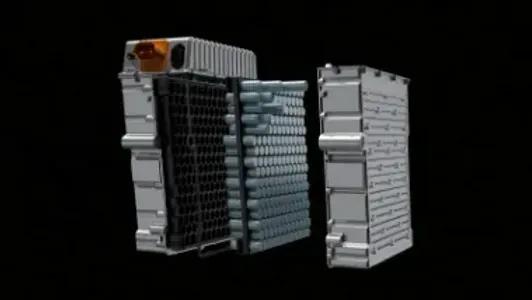
EV Charging Essentials : The OBC (Onboard Charger) and CCS2

Introduction
In the dynamic landscape of electric vehicles (EVs), a remarkable connection exists between the On-Board Charger (OBC) and the CCS2 connector, demonstrating a vital partnership in the realm of fast and efficient charging. This article decodes the synergy between CCCV (Constant Current, Constant Voltage) charging methods, the intrinsic role of OBCs, and the pivotal CCS2 connector, all converging to optimize the charging experience for electric vehicle users.
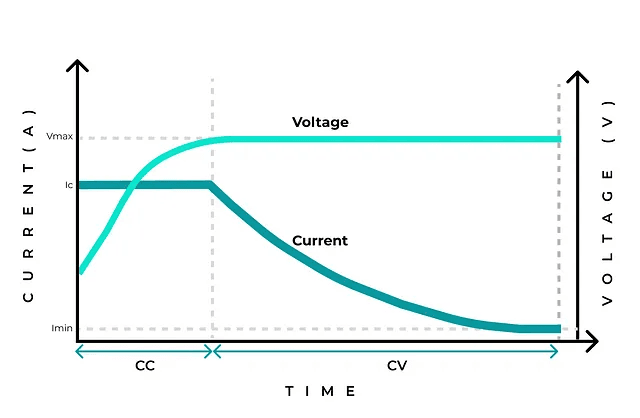
The CCCV charging method, widely employed for lithium-ion batteries in EVs, intricately balances two stages — Constant Current (CC) and Constant Voltage (CV) — to ensure optimal battery performance and longevity. The article delves into the meticulous design of this two-stage process, offering insights into how it safeguards against overload, heat generation, and overcharging.
CCCV Charging Method
The CCCV charging method is particularly relevant to on-board chargers (OBCs) in EVs. OBCs are designed to implement the CCCV charging method by regulating the charging current and voltage throughout the charging process. This helps to optimize battery performance, enhance safety and extend its lifespan.
Stage 1: Constant Current
During the first stage, known as Constant Current (CC), the charger delivers a consistent flow of current to the battery. This steadiness ensures that the battery receives a reliable stream of energy, guarding against overload or potential damage. Typically commencing with a high charging current, it gradually decreases as the battery voltage rises. This deliberate reduction mitigates excessive heat generation, contributing to the overall well-being of the battery. The CC stage persists until the battery voltage hits a predetermined level, usually hovering around 70–80% of its full capacity.
Stage 2 : Constant Voltage
Upon reaching this threshold, the charging process seamlessly transitions into the second stage — Constant Voltage (CV). In the CV stage, the charger maintains a steady voltage as the charging current gradually diminishes. This meticulous control protects the battery from the danger of overcharging, serving as a safeguard for prolonged battery life. The CV stage persists until the battery attains its full charge, completing the meticulous and strategic CCCV charging process.
Will OBC and CCS2 Connector Make the Best Charging Pair?
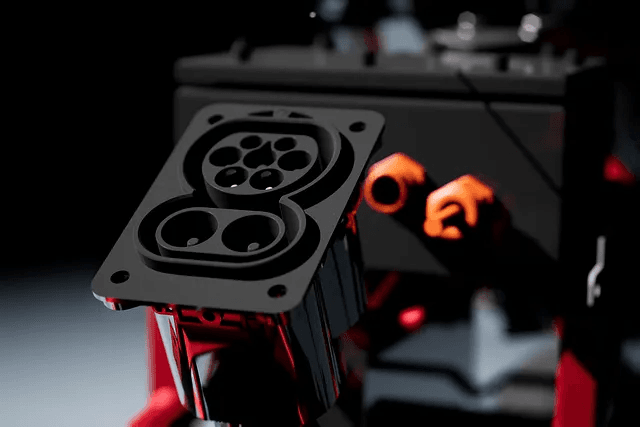
The OBC and CCS2 connector work together to enable fast charging of EVs. The OBC converts the AC electricity from the charging station into DC power, and the CCS2 connector provides a high-power connection to transfer the DC power to the EV’s battery pack.
How the OBC and CCS2 Connector Work Together?
AC Electricity Connection: The CCS2 connector is connected to the charging station’s AC power outlet.
AC-to-DC Conversion: The OBC within the EV converts the AC electricity from the charging station into DC power.
DC Power Transfer: The DC power is transferred from the OBC to the EV’s battery pack through the CCS2 connector.
Charging Control: The OBC and battery management system (BMS) work together to regulate the charging process, ensuring safe and efficient charging of the battery.
Fast Charging: The CCS2 connector’s high-power capability enables rapid charging of the EV’s battery.
The OBC and CCS2 connector are essential components that work together to enable fast and safe charging of electric vehicles, contributing to the advancement of EV technology and the transition to sustainable transportation.
Overview of EV Adoption due to OBC and CCS2 — Global and Regional
Over the past decade, the global landscape of electric 4-wheeler adoption has witnessed a remarkable surge, marked by varying progress across different regions. Despite starting from a smaller base, India has showcased promising growth potential in this transformative journey. Globally, the sales of electric 4-wheelers soared from around 60,000 units in 2013 to an extraordinary over 10 million units in 2022, representing a staggering 167-fold increase. The market share of electric vehicles in the global passenger car segment has seen a remarkable ascent, evolving from negligible figures in 2013 to over 14% in 2022, reflecting substantial progress propelled by growing environmental concerns, stricter emission regulations, advancements in battery technology, and supportive government incentives for EV infrastructure development.
China stands out as the undisputed global leader, contributing over 60% to global EV sales in 2022, driven by robust government policies, strong local manufacturers, and affordable options. Europe follows as the second-largest market, commanding over 20% share, fueled by stringent emission regulations and consumer preference for sustainable choices. The United States, the third-largest market, has witnessed rapid growth, marked by a 55% increase in sales in 2022, attributed to heightened consumer interest, diverse EV offerings, and federal tax credits.
In contrast, India’s electric 4-wheeler sales, although starting at around 200 units in 2013, have impressively surged to over 425,000 units in 2022, marking a remarkable 2,125-fold increase. The market share of electric cars in India, while still in an early stage of adoption, has reached around 1.5% of total car sales in 2022, illustrating a gradual but significant shift towards sustainable mobility in the Indian automotive market.
Conclusion
In the world of electric vehicles, the on-board charger might not steal the spotlight, but it plays a crucial role in making the EV experience seamless and convenient. So, next time you plug in your electric vehicle, take a moment to appreciate the unsung hero silently working to keep you charged and ready for your next emission-free journey.